Thirty years ago, the Environment Agency first opened its doors. It had a clear dual purpose: to protect the environment and support sustainable development. Back then, climate change was a distant warning rather than the pressing reality it is today. Public expectations on pollution were quieter. Technological progress and our ability to leverage data was slower. Our understanding of environmental pressures was less immediate. The world has shifted profoundly since 1996 and because of that, our regulation has changed – and is continuing to do so.
As the Environment Agency’s Chief Regulator, I think it is important to be honest about this journey. The moments that have been a catalyst for change, the challenges we’ve faced and the way our regulation has evolved can all tell us something important about what our regulation is for and where it needs to go next.
I am certain that what will not change is our determination to protect homes and habitats, to regulate with conviction, and to make sure those who pose a threat to the environment are held to account. That purpose has driven us throughout three decades and it will guide us through the decades to come.

Moments that changed our regulation
Some of the most significant changes to how we regulate have come from major incidents that have driven a real difference in our approach.
Case study: Buncefield
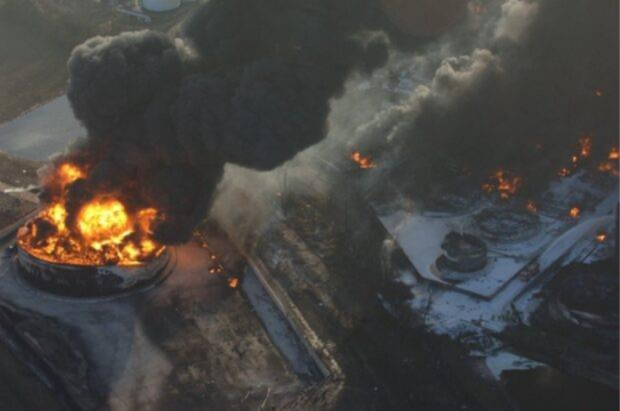
The Buncefield explosion in December 2005 was one of the largest peacetime incidents this country has seen. In the early hours of Sunday 11 December 2005, a dense fog formed around the Buncefield fuel depot on the edge of Hemel Hempstead. A large petrol storage tank was overfilling, and vapours spread across the site - where additional fuel tanks were stored - and beyond.
The explosion injured more than 40 people. Had it occurred at a different time of day, people may have been killed. Fires burned for five days, destroying much of the depot, damaging nearby businesses and properties. It devastated the surrounding environment and tested our response capacity to its limits.
It also fundamentally reshaped how the EA and our partners approach the regulation of major hazards. The Control of Major Accident Hazards (COMAH) framework that was developed following Buncefield raised the bar for safety at major hazard sites. Our subsequent role as part of the Competent Authority - working alongside our partner regulators at the Health and Safety Executive, Scottish Environmental Protection Agency, Natural Resources Wales and the Office for Nuclear Regulation - was key to making a step change in our approach to regulation of major hazards.
In its aftermath, we helped shape new fuel storage standards and worked closely with the industry and other regulators across England, Scotland and Wales to embed the lessons learned, which were published in 2011. This critical work has led to an improvement in safety.
Alongside major incidents, wider legislative and policy changes have also shaped our regulatory landscape. Over the past three decades, new laws, frameworks and targets have steadily expanded our responsibilities and strengthened the tools we use to protect the environment.
Case study: Brexit and the Environment Act 2021
The UK's departure from the European Union in 2020 ushered in the biggest rewrite of environmental policy in a generation. It created a need to establish a domestic framework for environmental protection that had previously been underpinned by EU law.
The Environment Act 2021 responded to that by introducing legally binding long-term targets for air quality, water, biodiversity and waste, and created the Office for Environmental Protection as a domestic watchdog. This means that regulatory bodies, including the EA, are increasingly accountable for how we uphold environmental law.
That strengthened accountability is something I welcome as Chief Regulator. It helps to ensure that our work is effective, proportionate and enabling of sustainable growth.
Technology is increasingly shaping how we regulate
These changes go together with another shift I’ve seen over my career: the rapid evolution of technology.
Environmental regulation has evolved from a mostly reactive discipline into one that is increasingly data-driven, intelligence-led and proactive. That evolution has been gradual. Nevertheless, the range of technologies we use today – from satellite monitoring to drone-led inspections – would have been almost unimaginable when the Environment Agency first began.
Case study: Using Optical Gas Imaging technology to tackle the harms of illegal waste
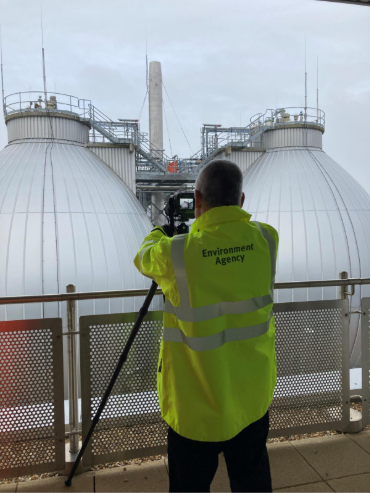
A good example of where technology is taking our regulation is our use of Optical Gas Imaging (OGI) cameras. OGI cameras allow our officers to visualise gas plumes and emissions that are completely invisible to the naked eye, including methane. That capability is transforming how we regulate emissions from permitted sites.
In Thames Area, our teams are currently using OGI cameras to support work on criminal waste dumping, helping our team identify fugitive odorous and gas emissions on site. Beyond immediate enforcement value, this work also contributes to reductions in methane emissions, directly supporting the EA's Methane Action Plan.
I’m clear that this is where our regulatory capability is heading – targeted, evidence-led action, supported by technology to manage risks proportionately.
Alongside on-site technological support, we are beginning to embed AI and machine learning into compliance analytics, moving away from routine time-based inspections towards a dynamic, risk-sensitive approach that identifies non-compliance earlier and targets our effort where it matters most. We are also developing a data returns portal to receive and act on near-real-time monitoring data.
I believe that this improved use of data and technology will increasingly underpin everything we do as a regulator. Just as technological developments have transformed regulation over the last thirty years, new systems will streamline high-volume services, improve customer experience, and support faster, smarter decision-making into the future.
Building the regulatory profession
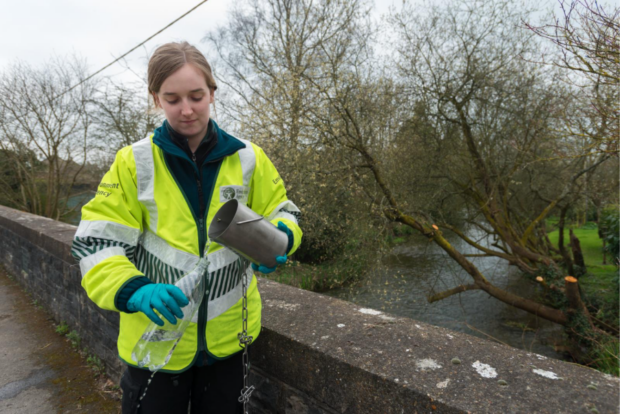
Our people have always been at the heart of environmental regulation. Our inspectors, scientists, permit specialists and enforcement officers are the ones who make the system meaningful on the ground. Over thirty years, the profession has grown enormously in capability and breadth. We now oversee 10,000 permitted sites and manage 22,600 miles of river across more than 40 regulatory regimes.
Case study: Developing a confident regulatory profession
We are investing in our profession more than ever before, through technical training, new career pathways and stronger leadership development. One of the things I am most proud of in recent years is the growth of our water enforcement capacity almost fivefold since 2023.
This has given us the largest team of investigators, enforcement officers and lawyers we have ever dedicated to tackling water pollution. This reflects a cultural shift towards tougher, more consistent enforcement and a clearer signal to those who pollute that the consequences are real.
What the sectors we regulate have achieved
Across the sectors we regulate, long‑term trends show how effective, sustained regulation can support positive environmental outcomes. The progress is measurable, and in many cases, decades in the making. I believe these outcomes demonstrate what is possible when clear standards, strong partnerships and evidence‑led regulation work together over time.
Case study: Supporting emissions reduction and nuclear safety over 30 years
Between 2000 and 2024, the industrial sectors we regulate under the Environmental Permitting Regulations saw a 55% reduction in greenhouse gas emissions, an 84% reduction in nitrogen oxides, a 97% reduction in sulphur oxides, and a 68% reduction in PM10 particulates. By maintaining clear expectations and applying proportionate, evidence‑based oversight, I believe that regulatory frameworks can help support these long‑term shifts.
I see a similar role when looking at nuclear regulation. In the 1980s and 1990s, radioactive sea discharges from Sellafield presented high-profile challenges. But between 2000 and 2004, an EA-led review of technetium-99 discharges - carried out alongside domestic and international partners - supported around a 90% reduction in those discharges. The results included declining levels in seafood, lower radiation doses to the public, and significant hazard reduction at storage facilities.
I'm proud about so much of what our regulation has supported, but there is more to do. As I reflect on the last thirty years, I'm equally focused on what comes next.
What comes next
The decades ahead will bring new pressures, including the escalating impacts of climate change, emerging pollutants, growing resource demands and rapid shifts in technology. Regulation will need to be more agile, proportionate and future facing. It must support innovation and sustainable growth while continuing to protect the environment.
Making our regulation more agile, we have launched our Accelerated Permitting Transformation (APT) Programme to create a faster, smarter and more consistent service which delivers better outcomes for applicants, people and the environment. Alongside our wider work to tackle ongoing challenges in key sectors, I believe that transforming our regulation will be at the heart of this country’s ambition as we face an increasingly fast-changing world.
Thirty years on
The Environment Agency remains steadfast in its mission. We are proud of the progress made, honest about the challenges ahead, and ambitious about what comes next. Our purpose has not changed – regulation that delivers for people, for nature, and for the future. That is what drove us in 1996 and it is what drives us still.
Leave a comment