How we investigate illegal waste sites
Waste crime is serious crime. It harms communities, undercuts legitimate waste businesses and can damage the environment.
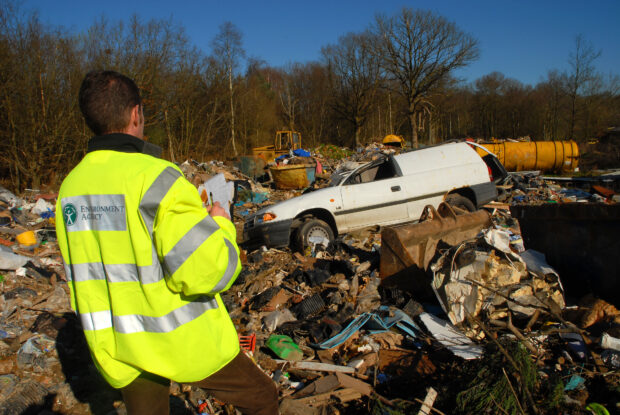
The Environment Agency investigates illegal waste activity in England. Our role is to assess and manage environmental risks, identify those responsible, and take enforcement action where there’s evidence of offending.
Illegal waste sites vary in size, scale and risk. Some may contain materials that could pollute land, water or air. That’s why we take a risk-based approach to every site.
How we assess risk
When we’re made aware of a suspected illegal waste site, we consider:
- what type of waste may be present
- whether the waste could pollute land, water or air
- whether pollution could spread through soil, surface water, groundwater or air
- whether there are nearby communities, rivers, protected habitats or wildlife
- whether further investigation or monitoring is needed
Environmental monitoring is not carried out at every site. We use it where there’s a credible risk and where monitoring would help us understand that risk or inform the action we take.
At Kidlington illegal waste site, for example, initial investigations showed potential contamination. We carried out water testing upstream and downstream of the site to help understand whether leachate or run-off could affect the local water environment.
What investigations can involve
Our work at illegal waste sites can include environmental, criminal and regulatory investigations.
This may involve:
- assessing the type and amount of waste present
- taking samples of soil, water or leachate where appropriate
- assessing fire risk
- identifying potentially harmful materials, such as asbestos or contaminated waste
- assessing possible impacts on rivers, protected habitats and wildlife
- gathering evidence to support enforcement action
In practice, major investigations often run on two tracks: assessing environmental harm and building a case against those responsible.
Taking action against waste crime
Where we have evidence that an offence has been committed, we take action. This may include:
- prosecution
- civil sanctions (an alternative to criminal prosecution)
- enforcement notices
- confiscation of criminal proceeds under Proceeds of Crime Act
- recovery of remediation costs, where appropriate
We work with partners including the police, local authorities, fire and rescue services and the UK Health Security Agency.
Human health concerns
We understand that communities living near illegal waste sites may be worried about possible exposure to contaminants.
The Environment Agency’s primary role is to regulate and investigate environmental risks. Our work can also help protect people by reducing the risk of exposure to harmful substances in the environment.
Where we identify information that may be relevant to human health, we share it with the UK Health Security Agency or local public health authorities. They’re responsible for assessing public health risks and providing health advice to communities.
If you’re unwell or worried about your health, contact your GP. In an emergency, call 999 or go to A&E.
Recent reporting about chemicals at waste sites
Recent media reports have referred to chemicals found at several illegal waste sites.
The testing was reported to be carried out on or near waste sites, not where people live. The sampling and analytical methods used provide an indication of the chemicals that might be present. Different testing would be needed to confirm exactly what substances are present, their concentrations and whether they pose a risk.
Waste sites commonly contain chemicals from household or commercial waste, such as cleaning products, old cosmetics or paints. Previous uses of the site may also impact what chemicals are found there. The presence of chemicals at a waste site does not automatically mean there’s a risk to nearby communities.
We’re reviewing the findings with partners to decide whether any further assessment is needed.
What you should do
Do not enter or approach an illegal waste site. These sites may contain unstable waste, sharp objects, harmful materials, dust, fumes or contaminated water.
If you believe pollution or illegal waste activity is happening, call the Environment Agency’s 24-hour incident hotline on: 0800 80 70 60
You can also report information anonymously to Crimestoppers.
Leave a comment