Elizabeth Maerz and Josh Barton
Water quality in Windermere has been the subject of considerable public attention. The Water Framework Directive is one way in which water quality is measured. But what do these classifications measure, and what do the latest results tell us about the health of Windermere and the wider catchment?
In this blog, we break down how the classification system works, what the results reveal about progress being made, and where there's more work to be done.
Whether you're new to the topic or already following the data closely, we hope this is a clear guide to understanding what's really happening beneath the surface.
What are Water Framework classifications?
Water Framework classifications are the way the Environment Agency is legally required to check the health of our rivers and lakes in England. The goal is simple: stop them getting worse, protect the wildlife that lives in them, and help them become healthier and more natural over time.
Every water body in England is classified as: High, Good, Moderate, Poor or Bad. High means it's in near-natural condition. Good means there's only slight disturbance from human activity. Poor means the ecosystem is heavily damaged and Bad means the water environment is severely degraded. The target is for every water body is to reach at least Good.
The latest results came out on 31 July 2026, these were based on three years of monitoring, giving us a picture of how water quality is changing over time.
How the scoring works
Each water body gets an overall score made up of two parts.
Chemical status checks priority Substances and Priority Hazardous Substances (such as specific synthetic pollutants, heavy metals, and pesticides) that pose significant risks to the water environment or human health. It can be either GOOD or FAIL as there are very strict standards for these specific chemical substances.
Ecological status looks at the wildlife (fish, plants, algae) and physico-chemical elements which act as supporting conditions that help sustain wildlife in water. These include oxygen levels, pH (acidity/alkalinity), temperature and nutrients (nitrogen and phosphorus). Nitrogen and phosphorus are essential for life, but too much of either, or the wrong form, can cause pollution. Ecological elements are rated High, Good, Moderate, Poor or Bad.
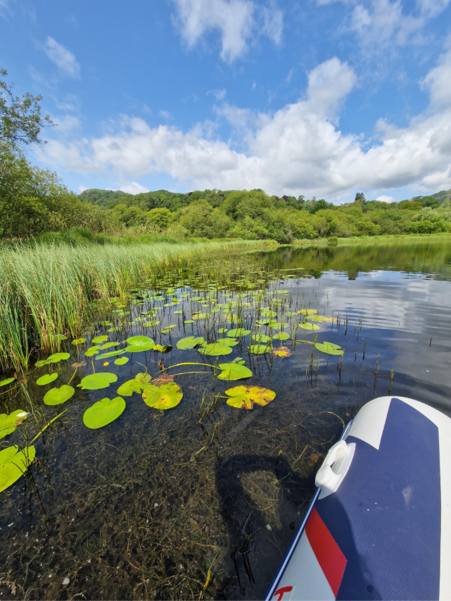
No waterbody in the Windermere catchment achieved Good Overall Status. This is due to the chemical status failing. This is not unique to Windermere. Across England, all water bodies currently fail the national chemical status classification because of trace amounts of long-lasting pollutants, such as mercury and polybrominated diphenyl ethers (PBDEs) — chemicals previously used to make products such as furniture and electronics more fire-resistant.
Some harmful chemicals, such as mercury and PBDEs, can build up in animals and pass along the food chain. To help protect wildlife and people, we measure the levels of these chemicals in fish, crayfish and mussels and compare them with agreed safety limits. We do this at a small number of monitoring sites in the rivers that feed the lake, but not on Windermere itself.
The Environment Agency uses results from the locations it monitors to represent much larger geographical areas for classification purposes. This approach recognises that these substances are widespread in the environment and are found far beyond their original sources. Chemical status failures are common nationally (and across Europe) and are not unique to Windermere.
How do the water classification rules work?
One of the critical rules often referred to as the “one out, all out” rule. The lowest-scoring biological element determines the Overall and Ecological status. Biological elements include things such as fish, aquatic plants (macrophytes), microscopic algae (phytoplankton) and invertebrates. These are considered the best indicators of the long-term health of a water body because their abundance and diversity reflect the conditions they have been living in over time.
Physical-chemical elements, such as phosphorus, dissolved oxygen, temperature and pH, support the biological classification and help us understand the pressures affecting a water body. If one of these supporting elements falls below Good, it can prevent a water body from achieving Good ecological status. However, only biological elements can drive the Overall and Ecological status below Moderate.
Think of it like a health check. The biology tells us how healthy the lake actually is, while the physical and chemical measurements help us understand what factors may be affecting it.
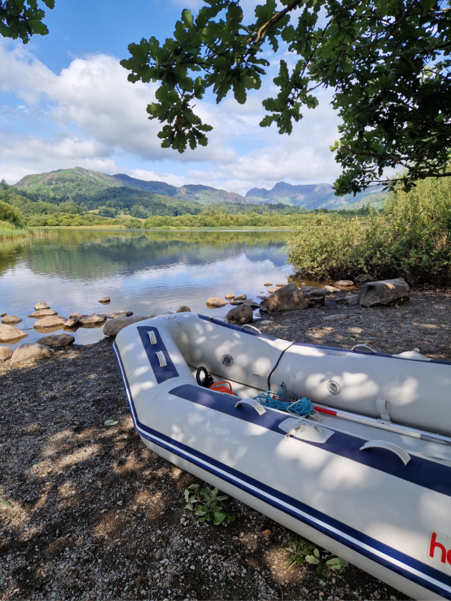
Windermere North Basin provides a good example of how this works. Although many of the elements assessed achieved Good or High status, nutrients like total phosphorus and total nitrogen, aquatic plants were classified as Moderate. As ecological status is driven by the lowest-scoring biological element, the overall ecological classification is also Moderate.
Grasmere provides another useful example. Dissolved oxygen is classified as Bad, which tells us there is a water quality issue that needs attention. However, the overall ecological status is Moderate because the lowest classified biological element, macrophytes, is classified as Moderate. This demonstrates how biological indicators determine ecological classification, while physical-chemical elements help explain the pressures acting on the water body
Where have there been water quality improvements in Windermere?
There's real progress to celebrate. Nutrient pollution, like phosphorus and nitrogen, is one of the biggest causes of algal blooms, and Windermere is improving on this front.
- The South Basin’s phosphorus rating improved from Moderate in 2019 to Good in 2022 and High in 2025.
- The North Basin’s phosphorus rating improved from Moderate to Good in 2022 and has remained Good.
- The North Basin’s nitrogen rating reached Good in 2025.
- The South Basin’s rating for microscopic algae (phytoplankton) reached Good in 2025.
This didn't happen by accident. It's the result of years of work driving investment from the Water Company, United Utilities, changes in practices from farmers, landowners, businesses and local communities across the catchment.
Good news continues across the Windermere catchment: no lakes got worse. Grasmere improved to High for both phosphorus and algae. Elterwater reached High for phosphorus too.
Rivers tell a more mixed story. The Rothay and Leven both saw their temperature ratings slip to Good, and the Leven's fish rating dropped to Moderate. Cunsey Beck stayed at Poor, unchanged from last time, because of its fish population.
What's next
The phosphorus improvements show that investment and teamwork are paying off. But challenges like climate change and warmer water remain, so there's no room to be complacent.
These results also help us spot where to focus next. Esthwaite Water, for example, is showing several Moderate, Poor and Bad scores, suggesting it needs more concentrated attention.
The takeaway: improving water quality takes time, but progress in the Windermere catchment proves that sustained effort really does make a difference.
Find out more about the Environment Agency's water monitoring on the water data explorer page Water Data Explorer | Engage Environment Agency
Leave a comment