
Author: Andy Brown, Water Regulation Manager, Environment Agency
Windermere is under pressure
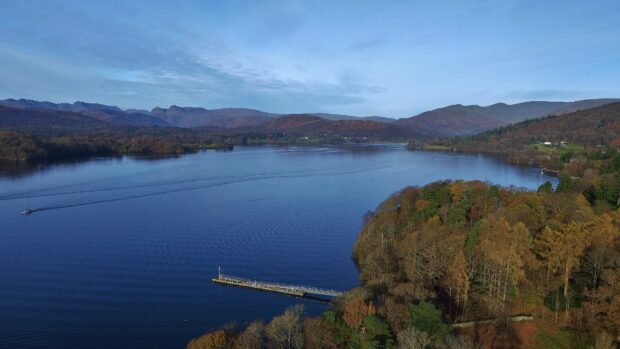
Windermere needs no introduction. Millions of people visit every year to swim, sail and soak up the scenery and beneath the surface it supports extraordinary wildlife. It is, quite simply, one of England's greatest natural assets.
But like many lakes across the country and worldwide, it faces a growing challenge from nutrient pollution and the warming effects of climate change. Nutrients like phosphorus and nitrogen enter lakes from wastewater managed by the water company and by private individuals or businesses and through run off from land. In small amounts they are a natural and essential part of aquatic life. When levels get too high, though, they trigger excessive growth of tiny plant-like organisms called phytoplankton and some of these, particularly blue-green algae, can produce toxins that are harmful to people and wildlife. Blooms can make water unsafe for swimming, put pressure on drinking water supplies and hit the local economy hard.
So, we asked a big question: what does climate change mean for Windermere's future and what can we do about it?
What we set out to discover
We wanted to answer two things.
- How will climate change affect nutrient levels and phytoplankton growth in Windermere and Esthwaite Water that drains into Windermere over the coming decades? And can targeted local action help counteract those effects?
To find out, we used computer models that connect what happens across the wider landscape - discharges of treated wastewater, storm discharges, land management including farming, rivers and streams draining into the lakes - with what happens inside the lakes themselves. We looked ahead to the 2070s and tested three different approaches to managing nutrient pollution. The results are genuinely fascinating.
What climate change could mean for these lakes
Climate change will alter how nutrients move through the landscape and into our lakes. By the 2070s, with climate change, the total amount of nutrients entering the lakes each year could increase by up to 7%. But it is not just the overall quantity that matters, it is the timing. Nutrient concentrations are projected to be highest in summer, exactly when algae grow fastest and when the lakes are at their busiest.
Without action, both lakes would exceed World Health Organisation safety thresholds for blue-green algae more frequently than they do today. In plain terms, that means more days when it would not be safe to swim, at the very time of year when people most want to be in the water.
That is the challenge. But here is where it gets exciting.
The good news: we can and are making a real difference
We tested three management approaches:
- Planned improvements by water companies to reduce nutrient discharges from wastewater treatment. This is the investment underway by the water company through AMP8.
- Support to adopt positive practices to reduce nutrient runoff from land across the catchment.
- Eliminating all nutrient inputs from wastewater treatment entirely.
Every single scenario produced positive results. Under each one, the number of days per year that blue-green algae exceeded the safety threshold was lowered even with climate change factored in. And in Windermere, the most ambitious scenario was enough to fully offset the projected climate impacts altogether.
That is a remarkable finding. Climate change is a global problem that no local team can solve on its own. But this research shows that targeted local action on nutrient pollution can genuinely protect the health of our lakes. As a nation, a county and community we have the ability to decide what is right locally, nationally and internationally.
Scientists have studied Windermere for decades and each piece of research adds another piece to the jigsaw, helping us build a clearer picture of the pressures the lake faces.
This research focuses on one specific type of phosphorus and doesn't cover other forms that can also harm the environment, nor does it look at bacteria like those tested at bathing waters. Some people may want to compare this research with the 2023 Source Apportionment study, but it's important to note that the two studies examined different types of phosphorus and organised their findings in different ways. This means they can't be directly compared - but both are valuable and valid pieces of research in their own right.
Every lake tells its own story
One of the more nuanced findings is that the same actions had different effects in the two lakes. In Esthwaite Water, algae levels remained a concern even under all three management scenarios, reflecting differences in size, depth, shape and historic practices.
This is actually a really useful insight for how we work going forward. Effective action needs to be tailored to the specific character of each lake or basin rather than applying a blanket approach. It means smarter, more targeted regulation, and ultimately better outcomes.
What this means for the future
This research is another important contribution to our understanding of Windermere, giving us and our partners greater insight to inform decisions about managing nutrient pollution as the climate changes. The modelling approach can also be applied to other lakes facing similar pressures, helping identify which interventions will work best and where.
It is important to note that this study focused on phosphorus and nitrogen. Other pollutants also affect lake health, which is why the Environment Agency pursues a broad range of initiatives beyond the scenarios modelled here, including work on sediment, bacteria, and land management across the whole catchment.
However, the headline message is an important one and one we are genuinely proud to share based on the quality of the scientific work done:
The impacts of climate change on our lakes are real and they are coming, but they are not inevitable. With the right action in the right places, and a collective approach to reducing nutrients from all sources - we can protect Windermere and lakes like it for the people, wildlife and businesses that depend on them, for generations to come.
Windermere has been here for thousands of years and with the right action, it will be here, healthy and thriving, for thousands more.
The full report can be found here: https://www.gov.uk/government/publications/nutrient-futures-for-windermere