
If you live near a waste site, recurring odour pollution or concerns about other types of pollution can quickly become a source of stress.
Monitoring is a shared responsibility. Site operators must monitor and manage their sites. The Environment Agency regulates those sites assesses compliance with permit conditions and acts where necessary to protect people and the environment.
Why environmental monitoring matters
From the Environment Agency’s side, we want to understand whether a waste site is operating as it should, whether permit conditions are being met and whether people or the environment are being affected.
Good environmental monitoring helps identify problems and possible solutions early, informs our regulatory decisions and can also support effective enforcement where necessary.
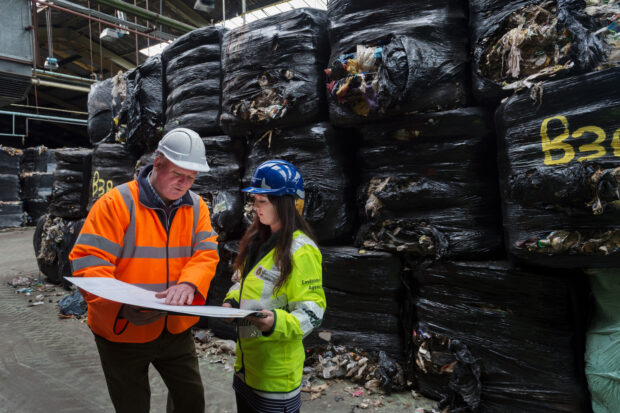
What is a waste site operator responsible for?
Operators are responsible for monitoring and managing activities at their sites.
The exact requirements vary depending on the type of site and the environmental permit in place.
Monitoring may include:
- daily compliance checking
- odour management
- noise management
- air quality monitoring
- landfill gas monitoring
- groundwater monitoring
- surface water monitoring
- leachate monitoring
- operational record keeping
Operators are required to understand the risks associated with their activities and take effective steps to prevent pollution and minimise environmental impacts
How does the Environment Agency monitor waste sites?
The Environment Agency independently assesses whether sites are complying with their permit conditions and acts to prevent pollution or where that is not possible, to minimise it.
We do this through a range of activities, including:
- site inspections
- site audits
- reviewing monitoring data
- investigating pollution reports and pollution incidents
- engaging with operators about site performance
We use evidence from multiple sources to build a picture of what is happening at a site.
How is odour pollution monitored and assessed?
Odour pollution is one of the most common concerns raised by communities living near waste management and industrial sites.
Operators may be required to have odour management plans that explain how they will prevent or minimise odour pollution and its impacts.
When we receive reports of odour pollution, our officers investigate to assess whether an odour is present, how strong it is and whether a permitted site is the likely source.
Environment Agency investigations into odour pollution need to account for a wide range of factors.
Weather, wind direction, temperature, other local activities, and their own individual sensitivity can all influence what people experience and where odour travel.
That is one reason why investigations rely on evidence gathered over time rather than assumptions based on a single report.
Why odour pollution reports are important
Reports of odour pollution from a community are a valuable source of information.
They help us identify patterns, understand impacts, the scale of the issue and target to our regulatory activity where it is needed most.
Every odour pollution report adds to the evidence available to us.
However, a confirmed odour pollution report on its own does not automatically mean that permit conditions have been breached.
The Environment Agency has to assess all available information, including monitoring data, site observations, the techniques being used by the operator to control the odour pollution and the evidence gathered by our officers.
How does the Environment Agency investigate waste site pollution reports?
The approach depends on the nature of the concern.
For example, we may:
- review pollution reports
- assess monitoring records
- carry out site inspections
- conduct off-site observations
- review operational practices
- investigate potential pollution pathways
- engage with the operator
Our aim is to establish what has happened, whether permit conditions are being met and whether further action is required.
What about other types of pollution?
Odour pollution is only one part of environmental regulation.
Many permits also include conditions designed to manage:
- dust
- litter
- pests
- air emissions
- risks to surface water
- risks to groundwater
Where concerns are raised, we assess the evidence available and investigate where appropriate.
Different issues may require different forms of monitoring and different regulatory responses.
How we decide what action to take
Not every pollution report will result in immediate enforcement action.
We prioritise our response based on environmental risk and the evidence available.
We consider factors such as:
- potential harm to people
- potential harm to the environment
- the scale and severity of the impact
- whether permit conditions may have been breached
- the urgency of the situation
Where we identify non-compliance, we require operators to improve their performance rapidly. In more serious cases, we will take formal enforcement action.
What you can do if you are concerned
If you believe a waste site is causing pollution, reporting it helps us build a clearer picture of what communities are experiencing.
The more information you can provide, such as location, timing and the nature of the issue, the more useful it may be in helping us assess the concern.
While we cannot promise a particular outcome from any individual report, community information plays an important role in helping us understand environmental impacts and target our regulatory activity.
Protecting people, places and the environment
People notice when something changes in their local environment.
A persistent odour, unusual or recurring pollution can affect quality of life and confidence in a neighbourhood.
That is why environmental monitoring matters.
By combining operator monitoring, regulatory oversight and information from local communities, we build a picture of risks, focus our efforts where they are most needed and take action to protect people, places and the environment.
How can I report environmental pollution from waste sites?
You can report pollution to the Environment Agency via our pollution hotline. This is manned 24hrs a day, 365 days a year. The number is 0800 80 70 60.
We have been working to update this service, and you can currently report odour pollution online at;
Report a smell from a waste facility, industrial site or farm in England - GOV.UK
Leave a comment