
Yasmin is an advisor in our Advanced Technologies and Fusion Strategy team. Here she highlights the benefits of our new early engagement process and the Environment Agency’s role regulating the fusion industry.
The Environment Agency, working alongside the Health and Safety Executive, is the regulator of fusion research sites and will jointly regulate future commercial fusion facilities.
We are working together to support the growth of the fusion industry while maintaining high standards of safety, security and environmental protection.
Why fusion matters?
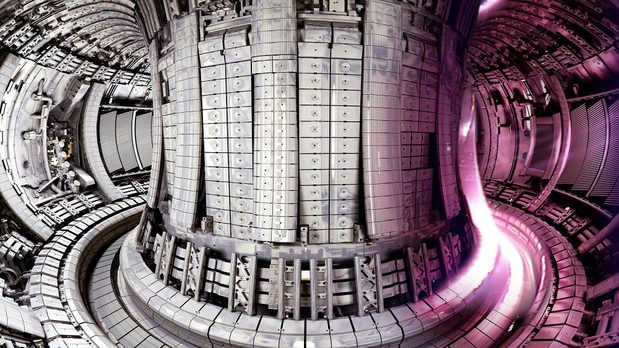
The fusion of light nuclei (hydrogen) is the reaction that powers the Sun and all other stars. A fusion machine utilises the fusion reaction between light nuclei, typically two different hydrogen isotopes - tritium and deuterium. In fusion, light nuclei combine to form a heavier nucleus, resulting in the release of energy, which is then used to generate electricity.
To produce energy from fusion on Earth, deuterium and tritium are heated to very high temperatures, ten times hotter than the core of the sun. These high temperatures cause free electrons to separate from atoms and a gas of charged particles, known as plasma, is formed. When this happens, helium is produced, and a large amount of energy is released.
Commercialising fusion has been difficult, partly due to the challenges associated with the high temperatures required for fusion to happen. Despite this, Fusion energy has the potential to play an important role in the UK's future energy mix as a low carbon and safe source of power.
What is the Environment Agency doing to enable commercial fusion?
The UK Government is investing £2.5 billion over five years to support the transition from research to commercial grid deployment. As research moves closer to commercial deployment, it is important that regulators ensure that growth happens in a way that protects people and the environment.
One way we are doing this is to support potential developers by reducing uncertainty. We’ve just published guidance on early engagement, which is for fusion companies that plan to develop and build in the UK and would like to engage with regulators. It’s an optional process, but it can be useful for designers and prospective operators to engage with regulators early to:
- understand the technology to be deployed
- clarify regulatory expectations
- set out development plans and timescales
- develop effective ways of working
We are already seeing the benefits of investment into fusion. Several technologies have applications in other industries, such as manufacturing medical isotopes, use in targeted cancer therapies, and the development of high-temperature superconducting materials. These are just some of the examples of emerging technologies to come from fusion research.
How are you building expertise and working with international regulators?
As fusion evolves, it’s essential that we evolve with it. We’re building international partnerships to ensure that regulators remain ready, informed, and aligned. It's important that UK regulators lead the way as the industry, global standards and regulations, develop.
We’re working with the Department for Energy Security and Net Zero to continue developing our expertise in fusion technologies to ensure the way we regulate remains proportionate and evidence based. We’ve also been building relationships and sharing our experience with regulators in the USA, Canada and Japan to work towards harmonisation where possible.
We’re working closely with the International Atomic Energy Agency (IAEA), participating in international working groups and contributing to technical discussions and guidance documents to help shape and influence regulatory approaches worldwide.
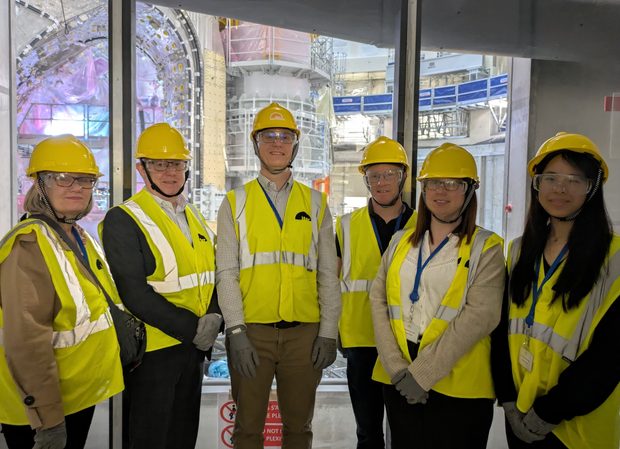
We visited the international project, ITER to understand how fusion is regulated in France. It was an opportunity to understand the scale of the project, as well as the regulatory lessons learned from an advanced project.
Our Deputy Director Andy Mayall highlighted how proportionate regulation is one of the building blocks for unlocking the potential of this clean energy technology at the US Nuclear Regulatory Commission's annual conference.
How our work is supporting sustainable growth and enabling innovation
Fusion technology is developing rapidly, catalysed by a combination of public and private investment around the world.
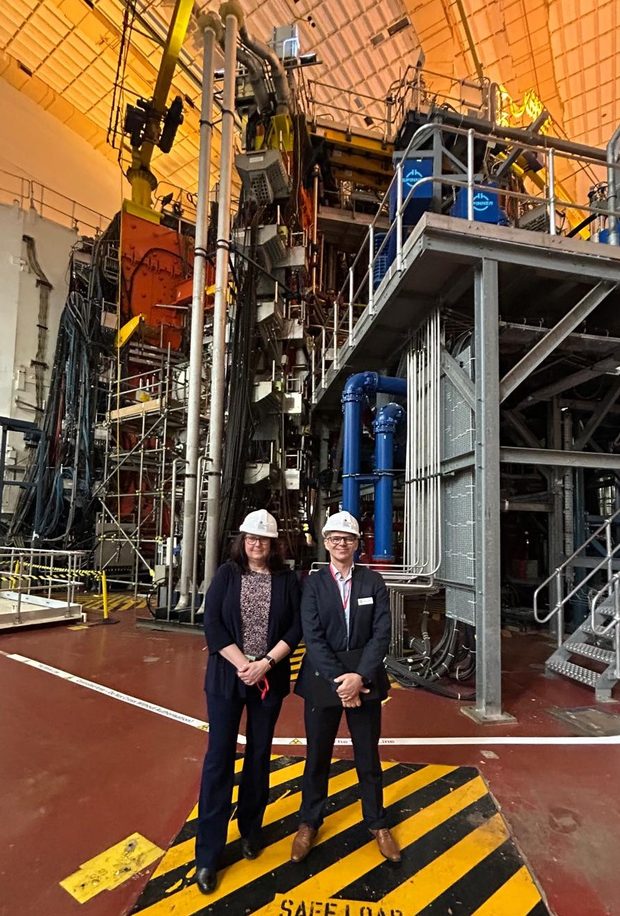
STEP Fusion is the UK’s prototype fusion energy project being developed at West Burton, Nottinghamshire. We’re providing pre-application advice to de-risk the project, which will demonstrate a path to commercial viability.
We’ll continue to work with partners across the industry to ensure that protection of people and the environment continue to be at the heart of this scientific frontier.
More information
Read our webpage.
New early engagement guidance for fusion companies.
Email your questions. fusion@environment-agency.gov.uk
Leave a comment