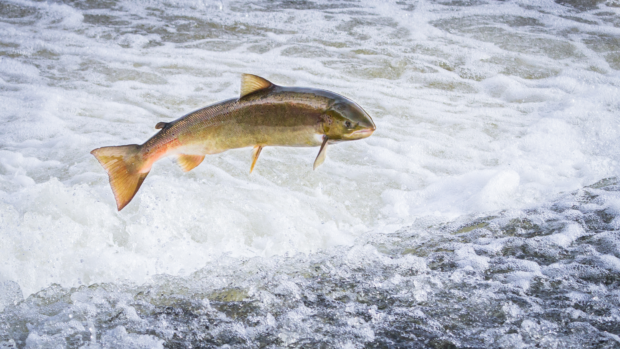
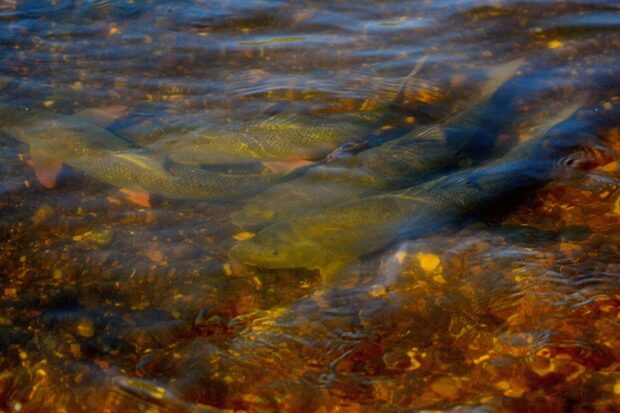
Atlantic salmon are a remarkable and iconic species. Hatching in rivers across Northern Europe, they migrate thousands of miles across the North Atlantic to feed and grow before returning to those same rivers to spawn. Every year, the Centre for Environment, Fisheries and Aquaculture …
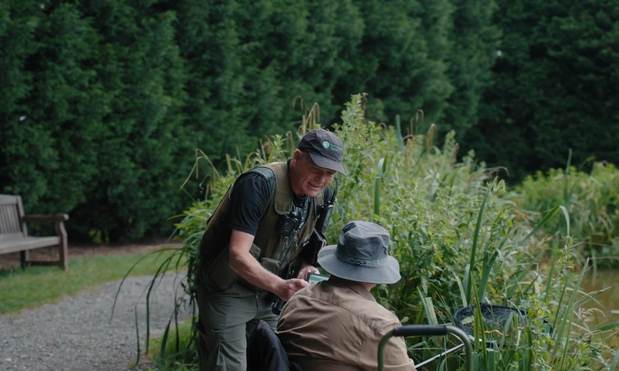
For most anglers, a Fisheries Enforcement Officer is the person who checks their fishing licence. But for the Environment Agency, the work of our enforcement officers helps protect fisheries, wildlife and the future of angling. From routine patrols and licence …
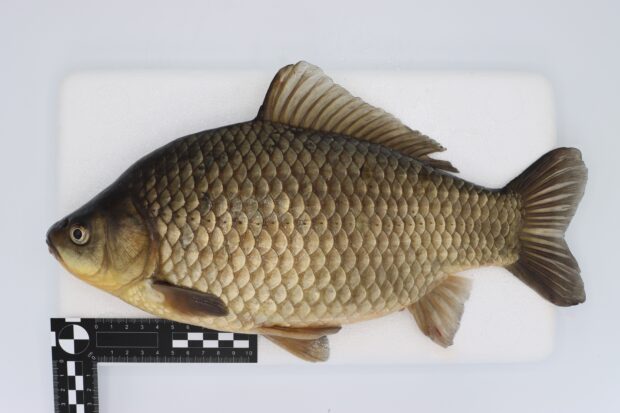
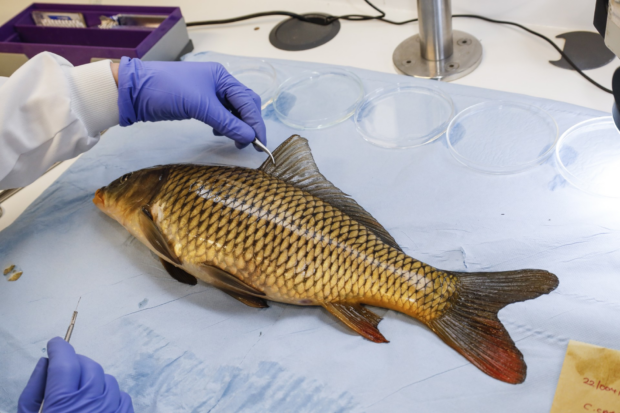
Protecting fish health and supporting sustainable fisheries is a key priority for the Environment Agency. We work closely with partners and fishery managers to reduce the risk and impact of fish health incidents, including Koi herpesvirus (KHV), which affects carp and presents a risk to recreational fisheries from potential significant fish mortalities.
We’re delighted to announce the launch of a new digital tool that lets you report on the health of your local rivers, lakes and beaches in real-time, directly from your phone. BluePrint, developed by the Environment Agency in partnership with Hello Lamp Post, builds on the success of WaterWatch - a year-long pilot that gathered public observations at five bathing water sites. Now, the concept is going national.
East Anglia is one of several areas across England experiencing prolonged dry weather or drought. Nationally, the Environment Agency is coordinating efforts through the National Drought Group to protect water supplies and the environment during this challenging period. Whilst the …
The Environment Agency has published the latest Atlantic salmon stock assessment for England, providing insights into the health of our salmon populations. The results, based on 2024 data, confirm that salmon stocks remain at critically low levels, underscoring the urgent …
What is the situation in England? Drought was declared in the West and East Midlands on 15 July, joining the North-West and Yorkshire which went into drought in June. Dry weather continues to impact water resources across England requiring water …
The evenings are getting lighter, and spring is very much upon us and this is the time of year that coarse fish up and down the country turn their attention to spawning. Adult fish will be spawning, or recovering from …
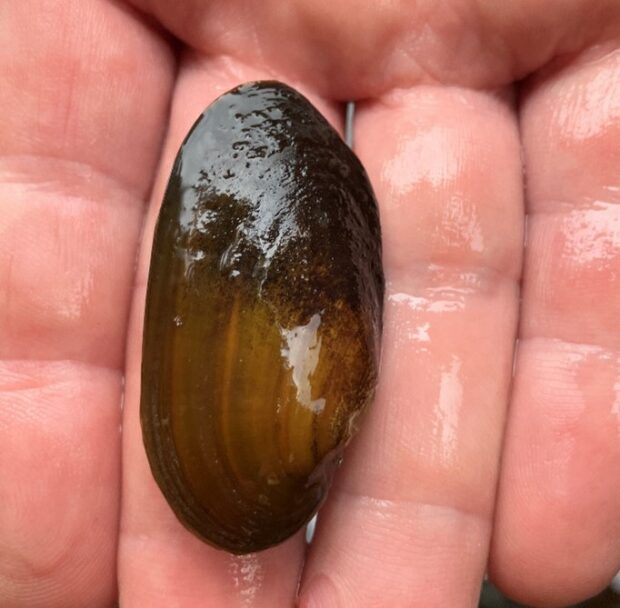
The critically endangered freshwater pearl mussel populations have declined drastically worldwide over recent decades. But conservation work at Kielder Salmon Centre in Northumberland is aiming to reverse that trend through a captive breeding programme and by working with partners to create healthier rivers.
Related content and links
Stories from the Environment Agency
The Environment Agency’s work helps to protect and improve the environment. We also manage flood risk and encourage sustainable development. This blog gives an insight into our work. Find out more.